How We Build Websites in Days, Not Months (No AI Slop)
Most agencies quote 3 to 6 months for a website. We ship in days using AI for production and humans for judgement. Here is the honest timeline.
Key Takeaways
- Traditional agencies quote 3 to 6 months for a website. Most of that time is queues and handoffs, not actual work on your site.
- AI collapses production time. A first working draft of your site can exist in hours, so the project shifts to refining a real thing with you.
- What AI does not change: the scoping, strategy, design taste, QA, gathering your content, and careful DNS and launch work.
- Honest timeline: days for a brochure site once your content exists. Weeks for ecommerce and migrations. Anyone promising faster is skipping QA.
- Fast and generic is worse than slow and good. Real photography, copy in your voice, semantic structure and Search Console measurement separate a real build from AI slop.
- This speed is why we do not need to charge a five-figure upfront bill.
Search "how long does it take to build a website" and you get the same answer everywhere: a simple site takes 1 to 2 months, a business site takes 4 to 8 weeks, ecommerce takes 8 to 16 weeks, and a big project takes half a year or more.
Those numbers were true for a long time. They are how most agencies still work. But they are not true for us, and I want to explain exactly why, because "we build websites in days" sounds like a scam unless someone shows you the working.
I run an AI-native agency in Essex. AI handles the production work in our builds. I handle the strategy and the quality control. That split is the whole story, and it changes the timeline more than any tool, template or builder ever has.
Why traditional website builds take 3 to 6 months
If you have been through a slow agency build, none of this will surprise you. The time does not go on building. It goes on everything around the building.
Discovery theatre. Weeks of workshops, personas and strategy decks before anyone touches a page. Some discovery is genuinely useful. Most of it is padding that justifies the invoice.
Handoffs. A designer makes mockups. They get approved, then handed to a developer, who builds something slightly different. Then a copywriter fills in the words, which no longer fit the design. Every handoff adds a queue, a meeting and a round of "that's not what I meant".
Revision queues. You send feedback on a Tuesday. The agency books it into a sprint two weeks out. You wait. You chase. You wait again. Your two-minute change took eighteen days.
You are one of twenty. Most agencies run 15 to 20 projects at once because each one drips along slowly. Your site gets a few hours of attention a week, spread thin across a team that is context-switching constantly.
Add it up and a ten-page site genuinely takes four months. Not because the work takes four months, but because the waiting does.
What AI changes
One thing, but it is the big one: production time collapses.
The hours a developer spends turning a design into working pages, the hours a copywriter spends on first drafts, the hours spent wiring up components and forms. That is production. It used to be the bulk of the bill and the bulk of the calendar. Now AI does the first pass in hours.
I build with Claude Code, Next.js and Vercel for our own sites, and modern stacks for client work. I describe what the page needs to do and who it needs to convince, and a working first draft exists the same day. Real pages, real navigation, real copy scaffolding. Not a flat mockup. A site you can click around.
Here is why that matters beyond raw speed. In the old model, you spent months on artefacts: briefs, wireframes, static designs. You only saw the real thing near the end, when changing it was expensive. In our model, the real thing exists almost immediately, so the entire project becomes the useful part: refining a working site with you. You react to something real, your feedback gets sharper, and the rounds get faster.
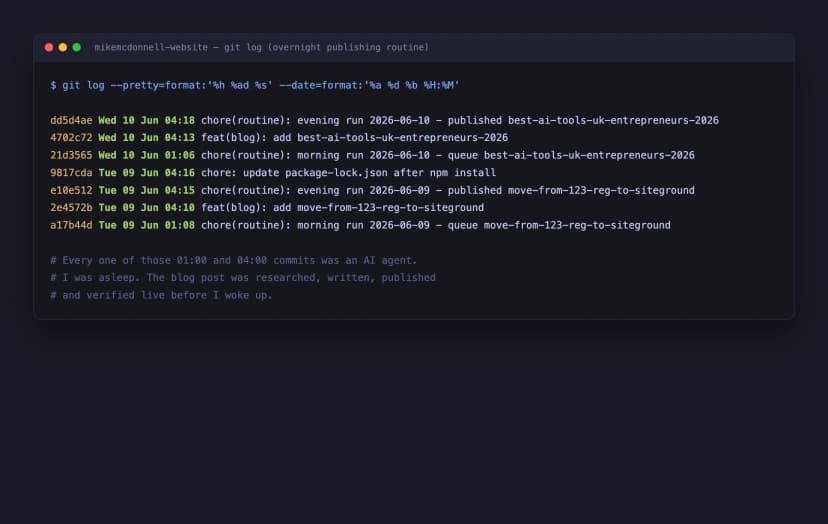
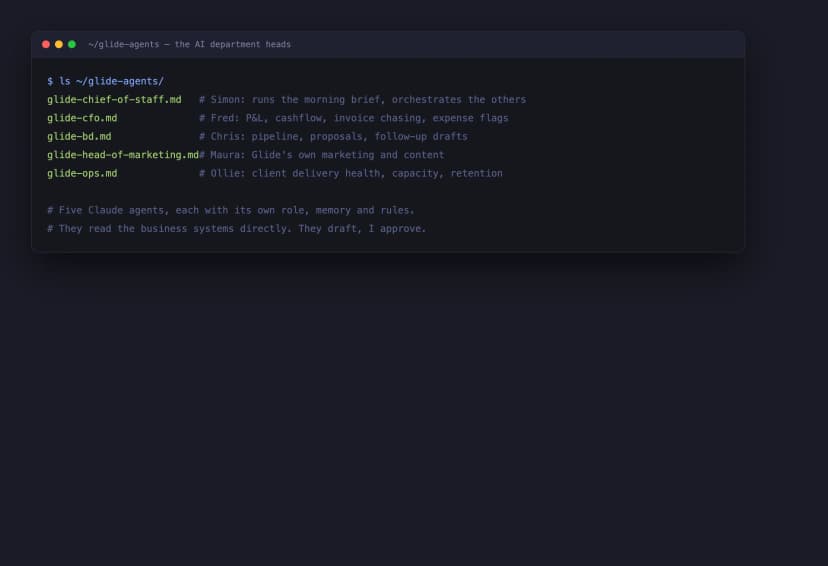
I have written in detail about how this works across the whole business in how I run a marketing agency on AI, with the commit logs to prove it.
What does not change
This is the part the AI hype merchants skip, so let me be straight about it. Plenty of the timeline is untouched by AI, and should be.
- Scoping. I still work out with you what the site is for. Who is it talking to, what should a visitor do, what does success look like in six months. AI cannot have that conversation for a business it has never met.
- Strategy and design taste. Deciding what goes on the homepage, what the offer is, what to leave out. Judgement, not production.
- QA. Every page gets checked by a human on real devices. Forms tested, links clicked, tracking verified. This is exactly where pure-AI builds fall apart, so it is exactly where we slow down.
- Your content. Photos of your actual team, your actual work, your actual premises. The facts about your business. If this arrives slowly, the project moves slowly, and no AI on earth fixes that.
- DNS and launch care. Pointing domains, setting redirects, keeping email alive, watching the site after it goes live. Boring, careful, human work.
So when I say days, I do not mean we skip these. I mean the production that used to bury them has shrunk, so these are now most of the project. That is a better project.
The honest timeline
Here is what I tell people when we scope a build, with no rounding in my favour.
A brochure site, content ready: days. First working draft within hours, then a few days of refining with you, QA and launch. If your photos and business details are sitting in a folder, this moves as fast as your feedback does.
A brochure site, content not ready: as long as the content takes. This is the number one delay in every website project ever built, and it has nothing to do with the agency. We help you gather it, but we will not fake it.
Ecommerce and migrations: weeks. Products, variants, payment flows, shipping rules, redirects and stock all need real testing. Faster than the 8 to 16 weeks the industry quotes, but I will not pretend a proper store ships in three days.
That is it. No 12-week discovery phase, no revision queue, no waiting behind nineteen other clients. The speed comes from the system, not from anyone pulling heroic late nights. The calm is the point. The machine does the typing and I do the thinking, usually with a coffee, never at 2am.
The AI slop warning
Now the uncomfortable bit, because speed has a failure mode and the internet is currently drowning in it.
Fast and generic is worse than slow and good. You have seen the slop sites: stock photos of laughing strangers in a meeting room, copy that says "we provide quality solutions tailored to your needs", the same layout as ten thousand other AI-generated pages. They go up in a day and they convert nobody. Google is getting better at ignoring them too.
What separates a real build from slop is not how long it took. It is what a human insisted on along the way:
- Real photography. Your van, your shop, your face. Slop sites have nobody to photograph.
- Copy in your voice. Written from what you tell us, the way you talk to customers. Not "empowering synergistic solutions".
- Semantic structure. Proper headings, real HTML that search engines can read. I wrote a whole piece on why semantic HTML matters for SEO because slop builds get this wrong constantly.
- Schema and measurement. Structured data so Google understands the site, and Search Console connected from day one so we can see whether it is working. Slop merchants never look at a site again after launch. We check the numbers monthly.
AI made building fast. It did not make taste, judgement or accountability automatic. That is what you are hiring.
Two real builds, not hypotheticals
Talk is cheap, so here are two projects from our own books.
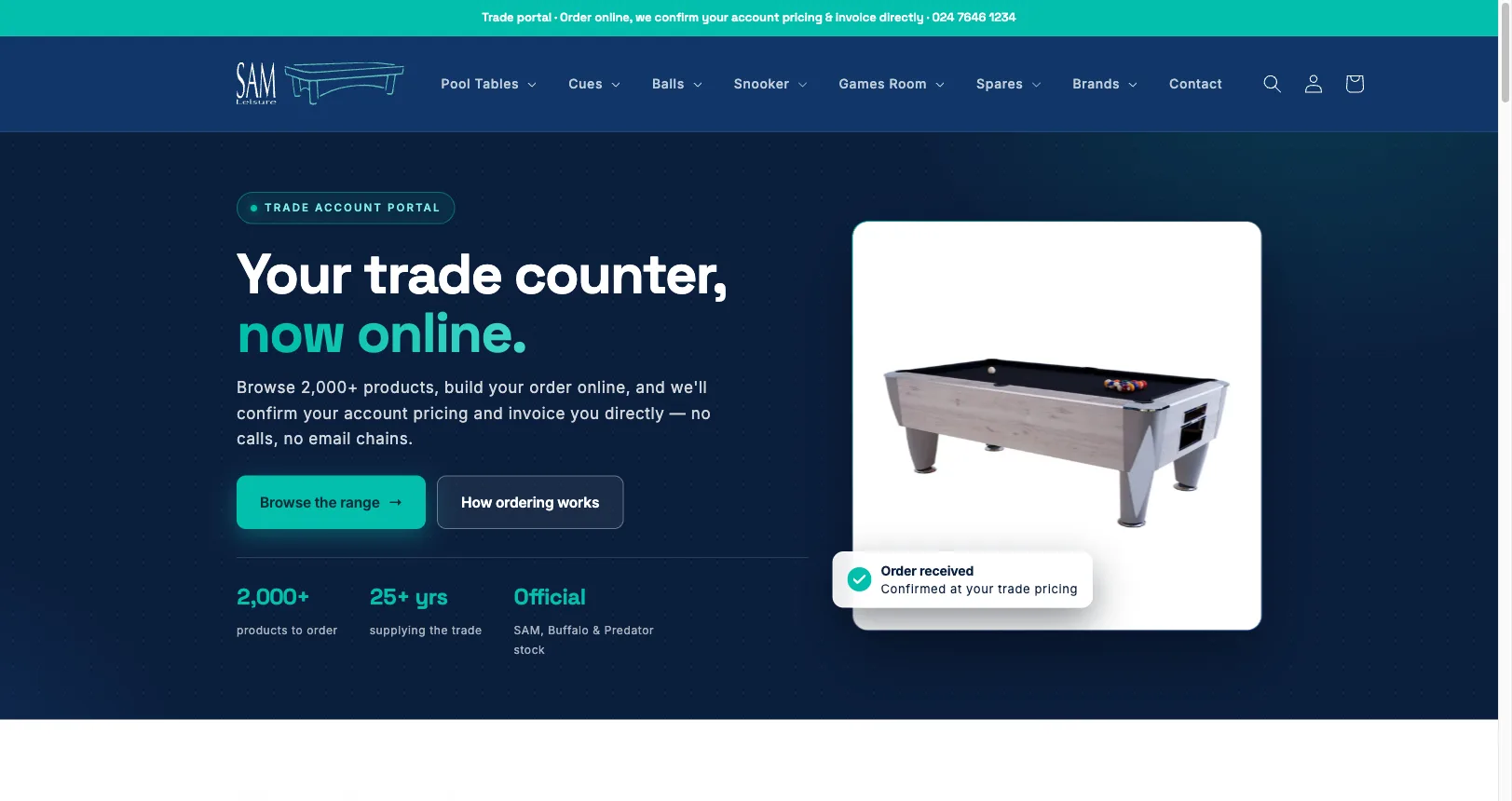
The SAM Leisure trade store
SAM Leisure sell pool, snooker and games equipment. They needed a trade store: a wholesale storefront where their trade customers could log in and order at trade pricing. We built it on Shopify as part of our Shopify work in Essex, with the AI handling component and page production while I handled the structure and checks.
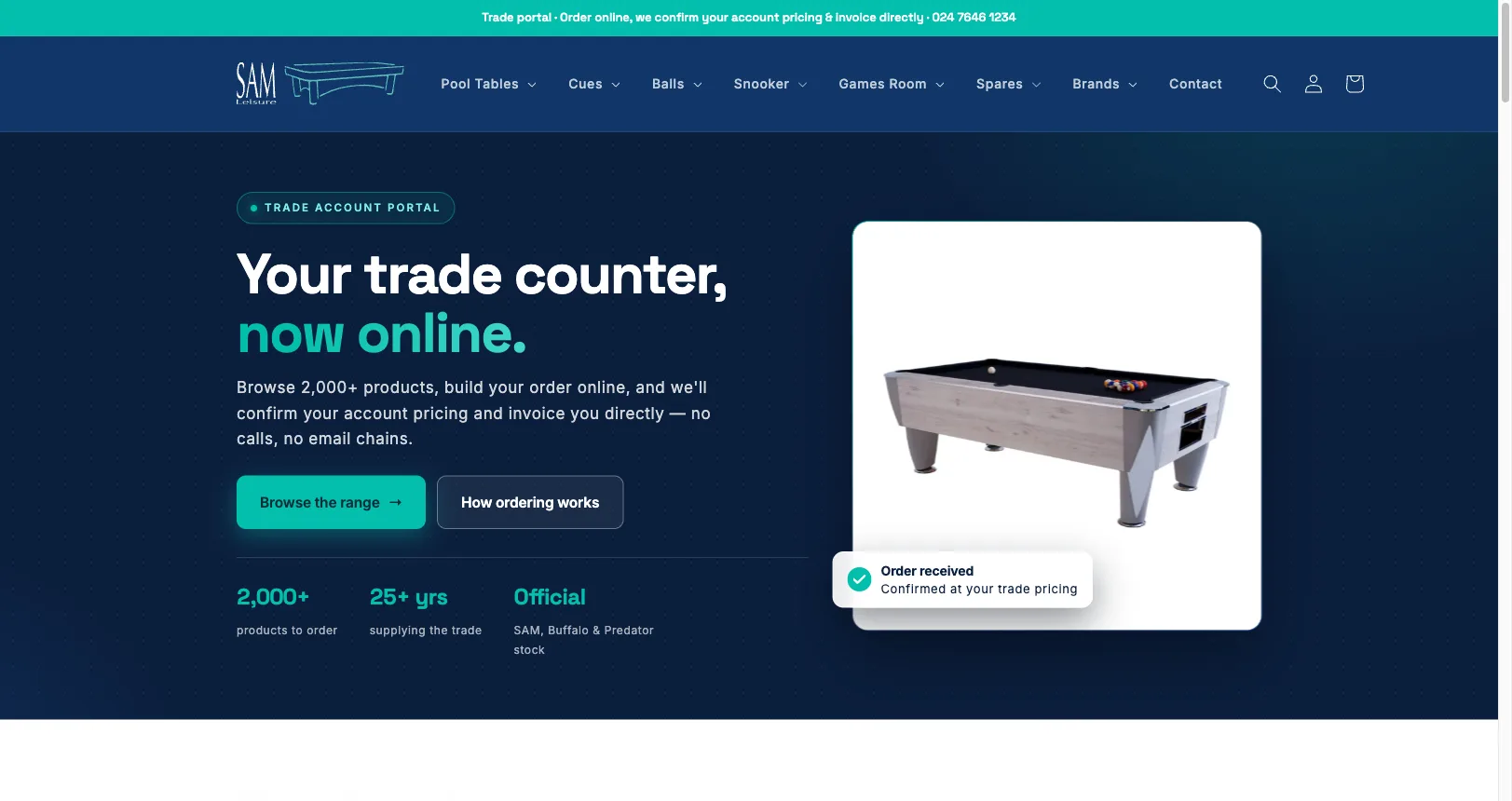
That was an ecommerce project, so it ran to weeks rather than days, exactly as I said above. The client liked it enough that moving their main retail site to Shopify came up in conversation, which is the best review an agency can get.
The skincare rescue
A skincare ecommerce brand we look after came to us in a genuine emergency. A botched WordPress update had wiped their store. Live site gone, orders dead, no working backup plan from their old setup.
We recovered the whole store from backup and had it back online in a day. Not a week, not "we will open a ticket". A day. The client left an unprompted five-star review and stayed on with us for the ongoing work afterwards, which tells you how the experience felt from their side.
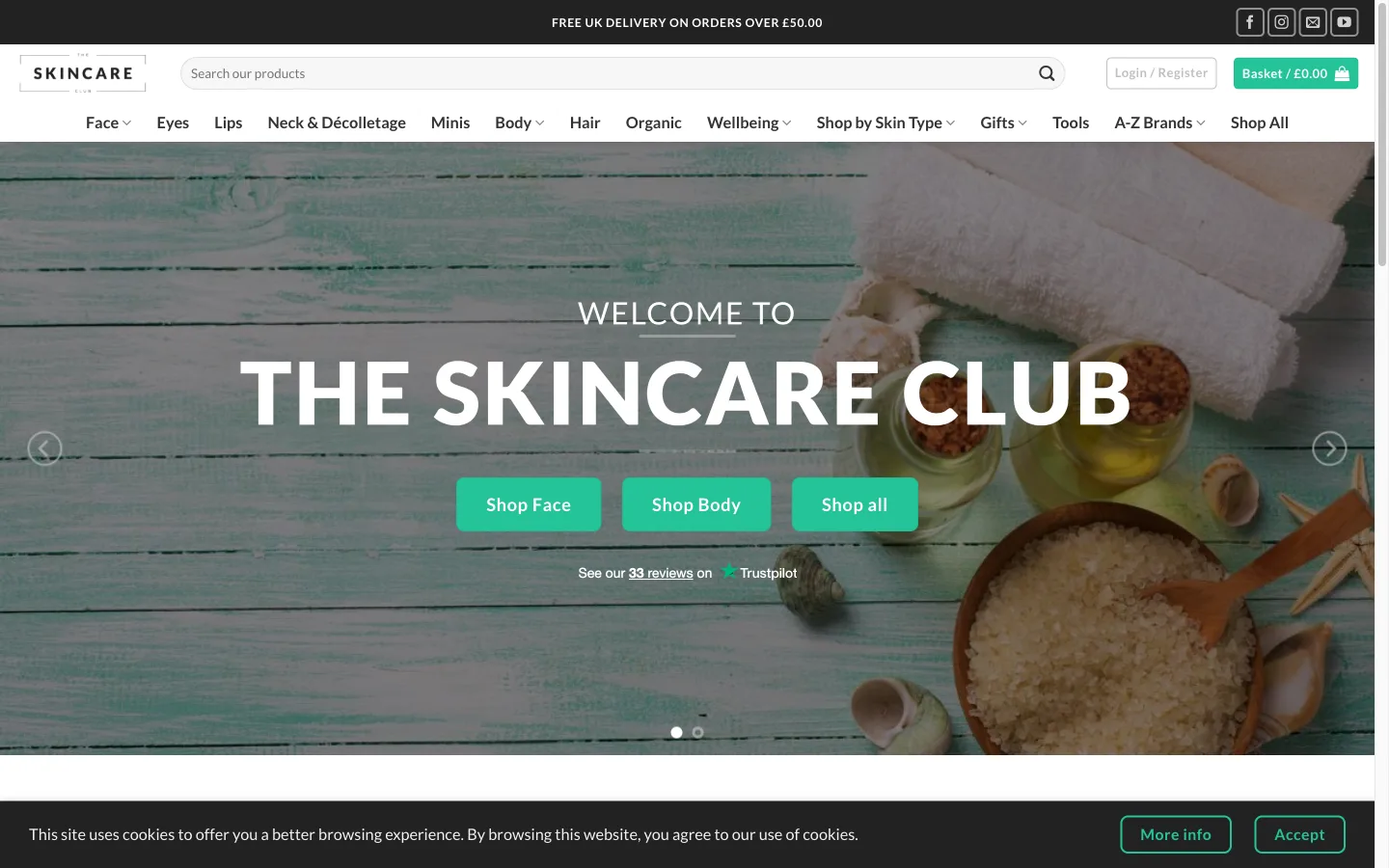
The rescue speed and the build speed come from the same place: systems that do production work instantly, plus a human who knows exactly what to check. Neither half works without the other.
Why this is the reason we charge monthly
Here is the bit most people miss. The five-figure upfront website quote exists because of the old timeline. When a build eats four months of human hours, the agency has to charge for four months of human hours, and you have to pay for them before you have earned a penny from the site.
When production collapses to days, that maths breaks, in your favour. There is no five-figure invoice for a website build and no big bet on an agency you have just met. The site goes live fast, and keeping it improving, measured and maintained is part of the work rather than an extra, which is where the long-term value sits.
What it comes to depends on the size of the site and what needs to sit around it. You get that figure in writing before anything starts, not at the end of a sales call.
The short version
How long does it take to build a website? With us: days for a brochure site once your content exists, weeks for ecommerce and migrations. The speed comes from AI doing the production while a human does the strategy, the taste and the checking. The slop comes from skipping the second half.
If you have been quoted four months and five figures, or you are nervous that fast means cheap and nasty, tell us about your build. I will walk you through exactly what it would involve, how long it would really take, and what it would cost per month. Worst case, you leave with a realistic timeline to hold your next agency against.
Mike McDonnell, Founder of Glide Marketing. More about how I work.
Frequently asked questions
How long does it take to build a website?
With a traditional agency, usually 3 to 6 months. With an AI-native process like ours, a brochure site takes days once your content is ready, and an ecommerce store or migration takes a few weeks. The honest variable is rarely the build itself. It is how quickly the content, photos and feedback arrive.
Can you really build a website in a few days?
Yes, and we have done it. We recovered and relaunched a wiped ecommerce skincare store in a single day. For a new brochure site, the first working draft usually exists within hours, and the remaining days go on refining it with you, testing it and launching it properly.
Is a fast website build lower quality?
Not if the speed comes from systems rather than corner-cutting. AI compresses the production work, like first drafts of pages and components. Strategy, design taste, QA and launch care still get full human attention. A rushed human build cuts those corners. Ours does not.
Will my website just be AI-generated content?
No. AI produces first drafts and scaffolding, then I rewrite copy in your voice, swap in your real photography, and check the structure, schema and tracking by hand. Nothing goes live without human sign-off, and we measure every site in Google Search Console afterwards.
What slows a website project down the most?
Content. Missing photos, unwritten about pages, and slow feedback rounds stall more projects than any technical issue. We get a real working draft in front of you early, which makes feedback faster because you are reacting to a real site rather than imagining one from a flat design.
How much does a fast website build cost in the UK?
There is no five-figure upfront bill. The build and the ongoing work are handled together and quoted on what the site needs, with the figure in writing on the first call. AI cutting our production time is what makes that possible.
What about ecommerce sites and migrations?
They take longer than brochure sites, and anyone who says otherwise is guessing. Products, payment flows, shipping rules and redirects all need proper testing. We built SAM Leisure a Shopify trade store and that kind of project runs to weeks, not days. Still nowhere near the 4 to 8 months some agencies quote.