The AI Agents That Work While I Sleep
I wake up, make a coffee and read what my business did overnight. Meet the five AI agents that run the back office at Glide while I sleep.
Key Takeaways
- Glide runs five named AI agents, built on Claude, that watch the business overnight and draft work for humans to approve in the morning.
- A weekday overnight routine researches, fact-checks and publishes blog posts on our own sites at 1am and 4am, and a morning brief lands before I wake up.
- The agents draft, they never send. They cannot touch money, and no client work goes live without human sign-off.
- The same thinking goes into the websites we build: a good site should capture leads, answer questions and get cited by AI while you sleep.
- AI agents are wrong sometimes. The human review layer is not a safety net bolted on at the end, it is the product.
Most mornings I wake up, come downstairs, make a coffee and read what my business did overnight.
Not what it needs me to do. What it already did.
That sentence sounds like a LinkedIn brag, I know. But it is the literal, boring truth of how Glide Marketing runs now, and I want to show you exactly what it looks like, because I think a version of it is coming for every small business... and the owners who understand it early are going to have a very nice few years.
A normal Tuesday morning
Here is what was waiting for me when I picked up my phone today.
First, a briefing. While I was asleep, my agents went through the business: the pipeline, the numbers, the marketing, the operations. By the time I woke up there was a written brief sitting in my inbox telling me what changed, what needs a decision, and what can safely be ignored. I read it with my coffee. It takes about five minutes.
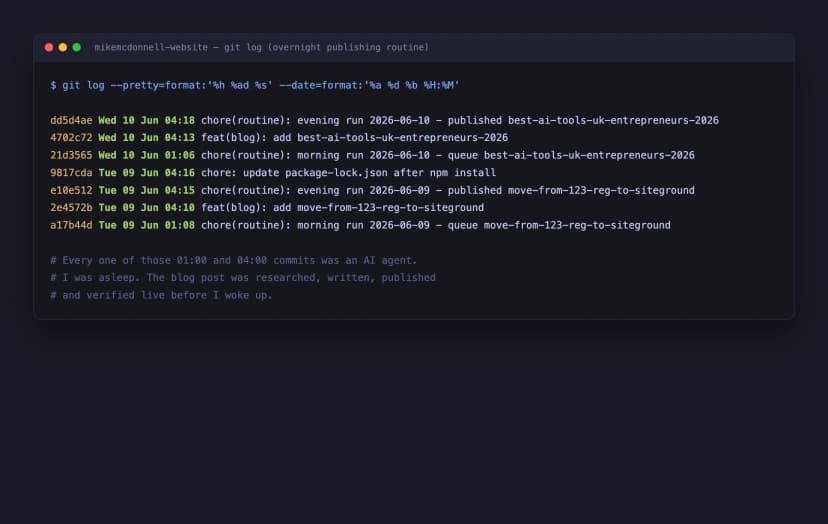
Second, new published work. At 1am and 4am on weekdays, an overnight routine researches, writes, fact-checks and publishes blog posts on my own websites. Not client sites, mine. Real posts, with real research behind them, live before I have opened my eyes.
Third, a sorted inbox. An email agent has already triaged everything that came in, filed the noise, flagged the things that matter, and drafted replies in my voice for the ones that need answering. I read each draft, change what needs changing, and hit send myself.
So by 7:30am, before I have done a single piece of "work", the business has reported on itself, published content, and prepared my replies. My job in that first hour is to read, decide and approve. That is it.
No grind. No 5am club. The agents do the early shift so that nobody has to.
Meet the five
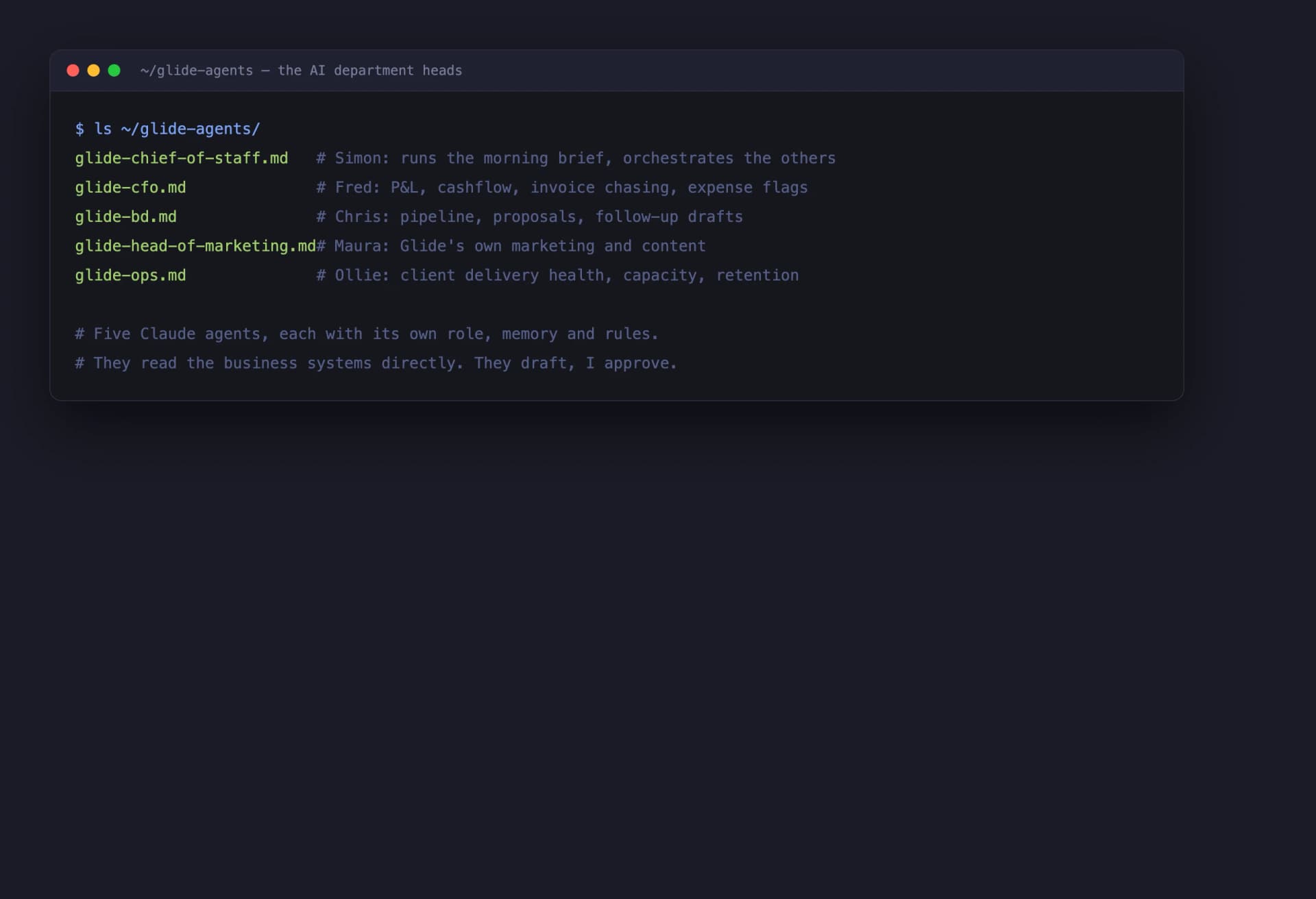
People imagine "AI running a business" as one big mysterious brain. It is not. It is five small, narrow workers, each with a name, a department and a job description, all built on Claude. We run Glide as an AI-native agency, which is a fancy way of saying the agents are the operating system, not a gimmick bolted on top.
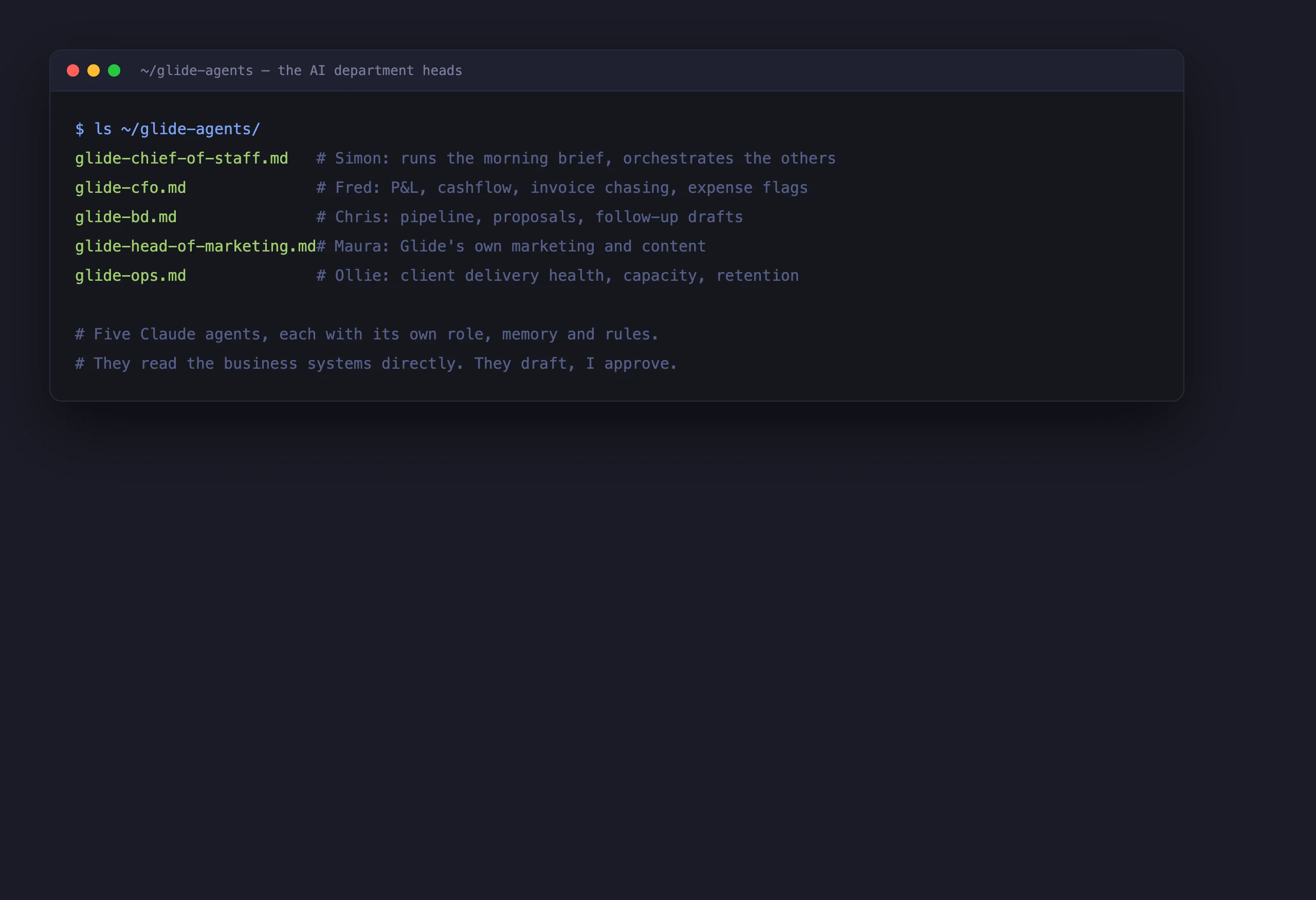
Here is the roster:
- Simon, Chief of Staff. Simon pulls the whole picture together. He reads across every department, spots what needs my attention, and writes the morning brief. If something is drifting, Simon is usually the one who says so first.
- Fred, CFO. Fred watches the money. Cash position, invoices, costs creeping up, anything that smells off in the numbers. He drafts the analysis; he cannot touch a penny.
- Chris, BD. Chris watches the pipeline. Who we have spoken to, what was promised, which conversations have gone quiet, and what a sensible follow-up would look like. He drafts. He never, ever sends.
- Maura, Head of Marketing. Maura watches Glide's own marketing: the website, the content, the search data. She drafts posts, suggests what to write next and keeps an eye on what is landing.
- Ollie, Ops. Ollie watches delivery and the machinery behind it. Systems, processes, the boring-but-vital stuff that keeps client work moving.
Notice the pattern. Every one of them watches and drafts. None of them acts on the outside world. That distinction is the whole design, and I will come back to it.
And to be clear, the humans are still very much here! Matt leads delivery. Abbie keeps the finances honest. Amber runs social for clients. The agents did not replace anyone... they took on the overnight monitoring and drafting work that no small agency ever hires for, because no sane person wants that job.
The proof
I would not believe any of this from a stranger on the internet either, so here is the commit log. Every time the overnight routine publishes a post, it leaves a timestamped record behind. You can see last night's shift right there: work going live at 1am, more at 4am, while the entire team was asleep.
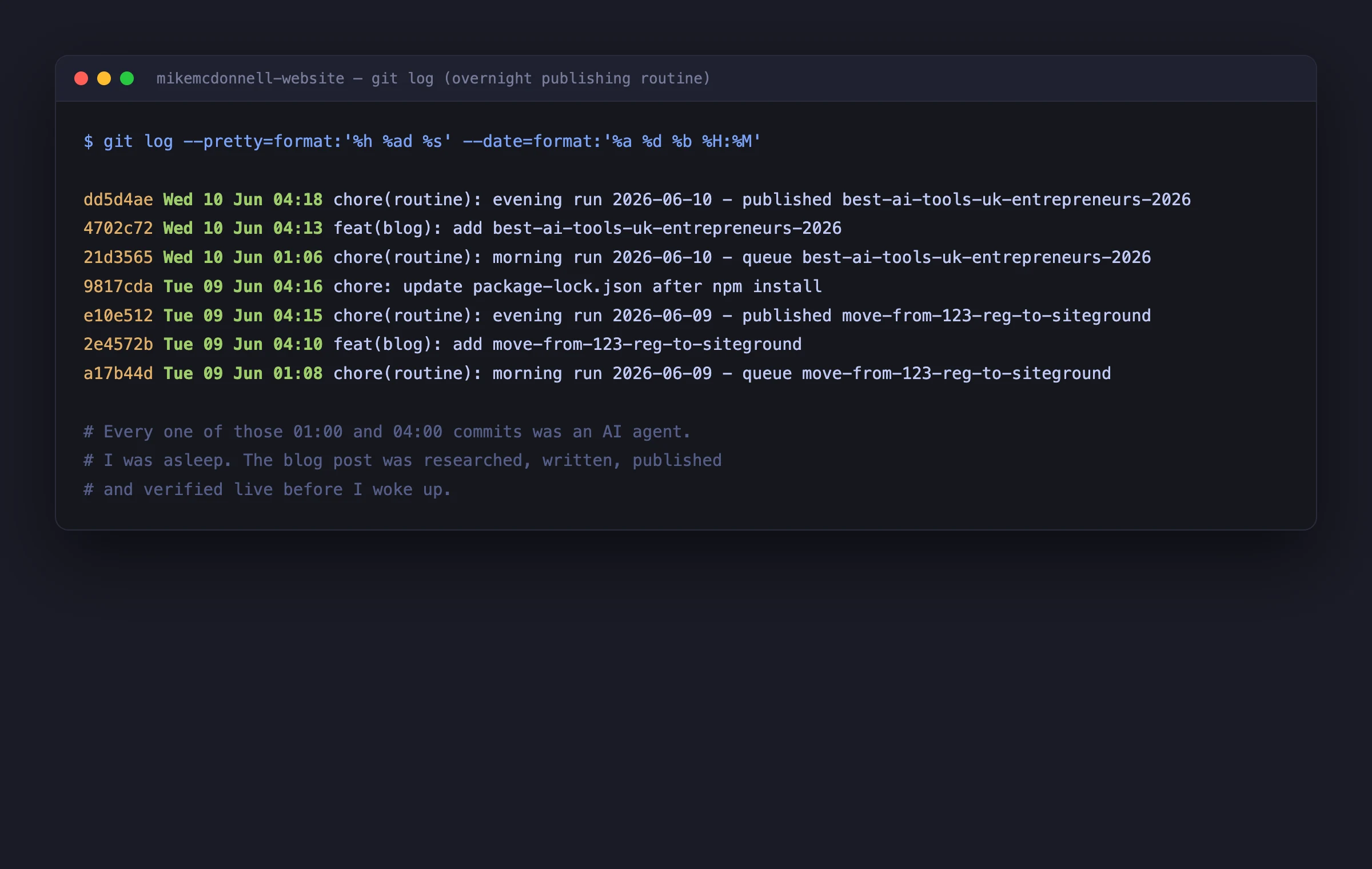
This is not a demo or a one-off experiment. It runs every weekday. If you want the full breakdown of the stack, the tools and how the pieces connect, I wrote that up separately in how I run a marketing agency on AI. This post is the shorter, more honest version: what it feels like to live with.
The rules that make it safe
Here is the part most "AI agents for business" content skips, and it is the most important bit. The reason I sleep fine with software working through the night is that the rules are strict and they are boring:
- Draft, never send. No agent sends an email, a message or a post to anyone outside the business. Ever. They prepare; a human presses send.
- Approve everything. Anything client-facing gets human sign-off before it goes anywhere. The overnight publishing only runs on our own sites, where the worst case is me editing a post over breakfast.
- No money. The agents cannot move money, raise invoices on their own, or change payment settings. Fred can tell me a cost looks wrong; he cannot do anything about it.
Why so cautious? Because AI agents are confident and occasionally wrong, and a confident wrong email to a client is far more expensive than ten minutes of my morning. The rules are not me distrusting the tech. The rules are why the tech is usable at all.
What this has to do with you
You might be reading this thinking: lovely, Mike, but I run a building firm, not a marketing agency. Fair! Here is the connection.
The thing my agents gave me is a business that keeps working when I stop. And that is exactly what your website is supposed to be. Most small business websites are a brochure that sleeps when you do. A good one is a worker on the night shift:
- It captures leads at 11pm when someone finally has time to look for help.
- It answers questions through genuinely useful content, so people arrive at the call half-sold.
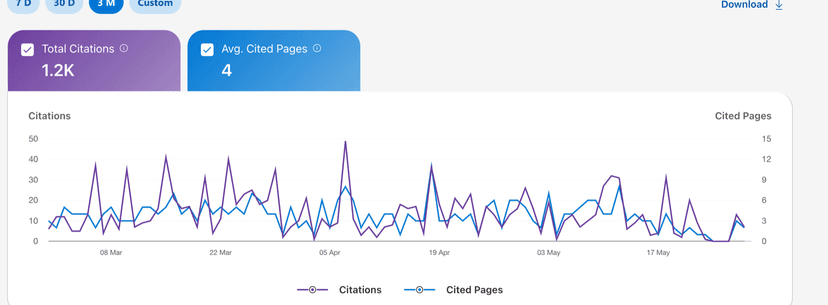
- It gets cited by AI. ChatGPT, Copilot and Google's AI results are answering your customers' questions right now, and they pull those answers from websites. I wrote about how to be one of those sources in my guide to AI search optimisation.
When we take on a web design project, that is the brief we build to. Not "make it look nice" (although it will), but "make it produce while the owner is asleep". The same systems thinking that runs Glide overnight goes into every site we ship. It is the most useful thing the agents taught me: stop asking what a thing looks like, start asking what it does at 3am.
Honest costs and limits
I promised honest, so here it is.
The agents are wrong sometimes. They misread a number, flag a "problem" that is fine, or write a paragraph that sounds right and is not. Anyone selling you AI agents that "just handle it" with no human checking is selling you a future apology to your customers.
There is also a real cost in attention. Somebody has to read the briefs, review the drafts and correct the agents when they drift, and at Glide that somebody is me. I think of it as managing a very fast, very keen junior team that never sleeps and occasionally makes things up. The management layer, the human reading with the coffee, is not the inconvenient bit of the system. It is the product. The agents make the work cheap; the human makes it trustworthy.
But the trade is wildly in my favour. The overnight shift costs me a software bill and a focused hour each morning. In return the business monitors itself, publishes for itself and prepares my day before I have woken up. Three and a half years ago I started this agency doing everything by hand. Now I start most days reading what my business did without me.
That is the easy life I am building, and it is the one I want for our clients too. If you want your website, or your whole back office, working the night shift, come and say hello.
Mike McDonnell, Founder of Glide Marketing. More about how I work.
Frequently asked questions
What are AI agents for business?
AI agents are pieces of software, usually built on a large language model like Claude, that can carry out multi-step work on their own: reading data, doing research, drafting documents and reporting back. The useful ones are given a narrow job and clear rules, then checked by a human before anything goes out.
What AI agents does Glide Marketing run?
Five, each named after the department they cover: Simon (Chief of Staff), Fred (CFO), Chris (BD), Maura (Head of Marketing) and Ollie (Ops). They are built on Claude. Alongside them sit an overnight publishing routine for our own sites and an email agent that triages the inbox and drafts replies.
Can the agents send emails or spend money on their own?
No, and that is deliberate. The agents draft, they never send. Nothing external leaves the business without a human approving it, the agents cannot move money or change payment settings, and no client work is ever published without sign-off.
Do AI agents replace staff?
Not at Glide. Matt still leads delivery, Abbie still keeps the books straight, Amber still runs client social. The agents took the overnight monitoring, reporting and drafting work that nobody was hired to do in the first place. Humans now spend more time on judgement and clients, not less.
Are AI agents reliable enough to trust?
Reliable enough to draft, not reliable enough to act unsupervised. Ours occasionally misread a number or flag something that turns out to be fine. That is exactly why everything they produce is a draft for a human to check. The review layer is the whole point, not an afterthought.
Could a small business set up something similar?
Yes, and you do not need a developer team. Start with one painful, repeatable job, like inbox triage or a weekly numbers summary, give the agent read-only access and a draft-only rule, and review its output for a few weeks before trusting it with more.