Marketing for financial advisers who want more enquiries, without the compliance risk.
Most agencies do not understand the FCA rules that govern how a financial adviser can market. We do. Glide builds your website, gets you found by the clients already looking for advice, and runs your ads, with the financial promotion rules and the Consumer Duty built in. More of the right enquiries, and nothing that puts you in front of your compliance officer for the wrong reasons.
Marketing a regulated advice firm is not like marketing anything else
Every claim, every ad, every landing page can be a financial promotion. One loose line and it becomes a compliance problem. So most advisers either avoid marketing and watch the referral pipeline dry up, or hand it to a generalist agency that does not know the rules and hopes for the best. Neither gets you in front of the right clients safely.
In 2024 the FCA had 19,766 promotions amended or withdrawn after its interventions, nearly double the year before. Worth reading that figure carefully: it spans every authorised sector, and 46 per cent of it came from just 46 claims management firms. It is not an adviser-sector number. What it does show is a regulator paying much closer attention to marketing than it was two years ago.
Your website is probably over-warned, and the FCA has said so
Most adviser sites are built on inherited caution. A disclaimer under every heading, a risk banner on every page, the same eight words of small print repeated until nobody reads any of it. It feels safe. It costs you enquiries, and it is not what the rules ask for.
In December 2025 the FCA published guidance on risk warnings for mainstream investments, updated in May 2026. It reads as a deliberate correction of industry over-caution, and it names five things firms believe that are not true.
What firms think
Every promotion needs the words “capital at risk”
What the FCA says
We do not prescribe risk wording for mainstream investments. Our behavioural testing has suggested just stating “capital at risk” is often ineffective.
What firms think
The risk warning has to sit separately from the main copy
What the FCA says
There is no requirement for mainstream investment promotions to include a separate risk warning. They must provide a balanced view of the benefits and risks, to give consumers a fair description of the product or service.
What firms think
Risks have to come before benefits
What the FCA says
We do not mandate how you should order your promotions. Risks do not need to come first.
What firms think
Brand advertising needs risk information too
What the FCA says
Image advertising, such as branding, does not need information about risks.
What firms think
The warning must be repeated on every page of the journey
What the FCA says
Promotions must be standalone compliant. This does not require generic, repeated risk disclosure on every page.
The FCA goes further and warns that generic risk warnings can be unnecessary, and can mislead or confuse consumers by detracting from the risks that matter. Consumer Duty pulls the same way: the Consumer Duty guidance tells firms to avoid unnecessary disclaimers. Clear beats cluttered, and for once that is the compliant answer as well as the commercial one.
Important limit: that guidance covers mainstream investments. High-risk investments have their own prescribed warnings and sit outside that guidance, so none of the above applies to them.
Everything you need to grow, built for a regulated firm
Seven things we check before a word of yours goes live
These are the patterns we find most often on adviser websites, with the rule that governs each one. Every reference below was checked against the live FCA Handbook rather than written from memory.
Restricted advice, but the site says independent
COBS 6.2BIf a firm can only recommend from a limited list of products, it cannot call itself independent. If it does both kinds of advice, it can only use the word independent about the part that genuinely is, and cannot give that part more prominence than the rest.
A performance chart on the homepage
COBS 4.6You can show past performance, but not as the loudest thing on the page. It has to cover five years, say where the figures came from, carry a clear warning that past performance does not predict future returns, and show what charges do to the numbers.
Projected returns in a brochure or calculator
COBS 4.6You can only show projected returns if you can evidence them with real data, and you have to show a bad scenario alongside the good one. If you cannot get the data, the rule says do not publish the projection at all rather than caveat it.
The risk line set in smaller type at the foot of the page
COBS 4.5Risk wording has to be at least the same size as the text around it. Shrinking it to keep a page looking clean is a rule breach, not a design choice. It is the single most common thing we find.
The words guaranteed, protected or secure
COBS 4.2These are restricted words. You can only use them if they are genuinely accurate and you have given all the context that makes them accurate. They cannot be used as sales language.
Tax benefits mentioned without the caveat
COBS 4.5Any mention of tax treatment needs a clear line saying it depends on the client’s own circumstances and could change. Very commonly missed.
A comparison against other advice firms
COBS 4.5You can compare yourself to other firms, but the comparison has to be meaningful and fair to both sides. Marketing that works by making a rival look bad does not clear it.
None of this is legal or regulatory advice, and we are not your compliance function. It is the standard we write to, so what goes live is designed to pass rather than be walked back later.
We already market inside the FCA's rules
Glide runs compliant SEO and Google Ads for an FCA regulatory compliance consultancy, the kind of firm that advises others on getting compliance right. Consumer Duty, financial promotions, getting verified to advertise: this is our normal, not a risk we are learning on your account.
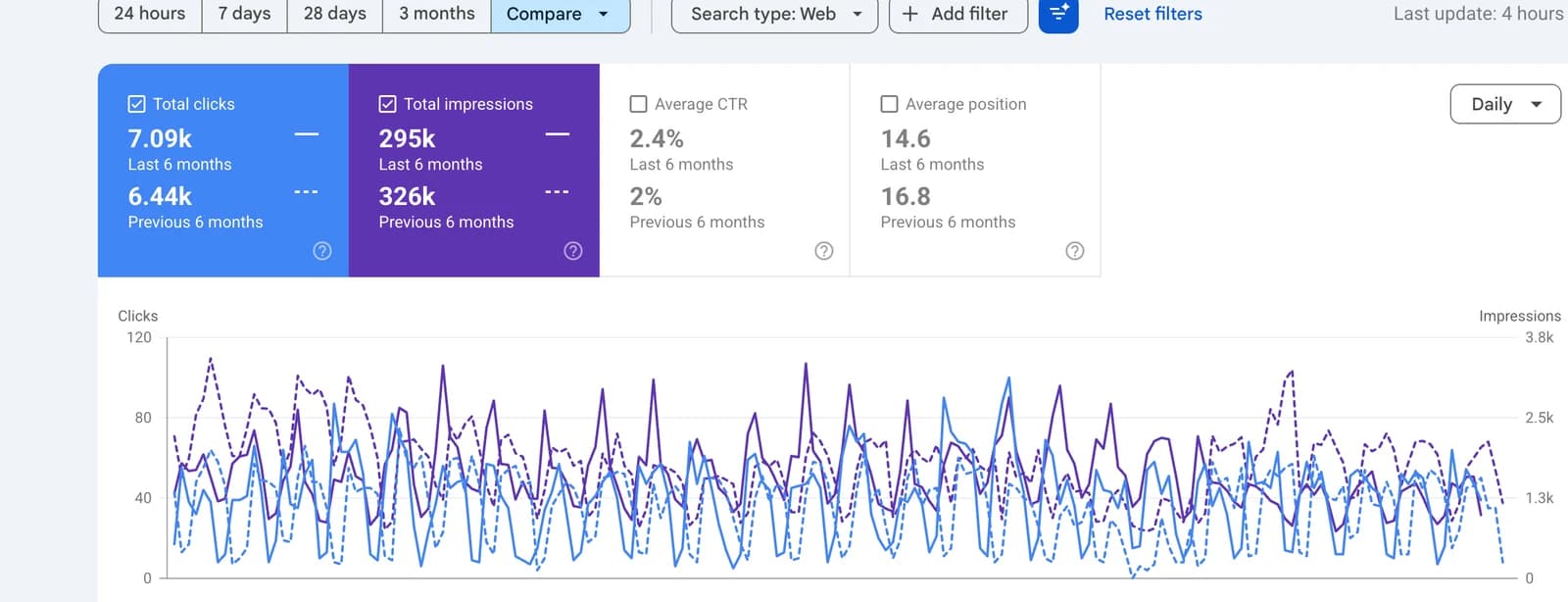
Square 4 Partners (FCA compliance): we roughly halved a financial-services compliance consultancy's average Google position, from about 28 to about 14, and held it there for nine months. On the specific FCA-compliance terms their buyers search, they rank on page one.
Straight framing: it is compliance, not advice, but it is the same rulebook.
Read the Square 4 case studyProof we can market inside these rules
The Glide Retainer, from £1,000/mo
One monthly retainer covers the website, the search foundations and the ongoing work, with compliance built in. From £1,000 a month plus VAT, and no five-figure upfront bill.
See pricingFinancial adviser marketing, answered
Yes, with the right setup. Google has required verification for financial services advertisers targeting the UK since 6 September 2021, and it covers every ad format and asset, including services that are not FCA regulated. You apply with your FRN, your business details and your domains, plus a warranty that you will comply with the financial-promotion rules. Two things catch firms out. Your Google Ads account must contain a contact on the same email domain as the FCA-registered firm, and your business details must match the FCA register exactly, so an old trading name or a missing domain fails the check. We handle the application and the account setup.
For mainstream investments, no, and the FCA has said so directly. Its guidance on risk warnings, published in December 2025 and updated in May 2026, states that it does not prescribe risk wording for mainstream investments and that its behavioural testing suggests just stating “capital at risk” is often ineffective. What the rules require is balance: a fair and prominent indication of the risks wherever you reference the benefits. This does not apply to high-risk investments, which carry their own prescribed warnings.
Not a generic repeated one. The FCA is explicit that promotions must be standalone compliant but that this does not require generic, repeated risk disclosure on every page. It goes further and warns that generic risk warnings can be unnecessary and can mislead or confuse consumers by detracting from the relevant risks. Consumer Duty pushes the same way: the Consumer Duty guidance tells firms to avoid unnecessary disclaimers.
No. If you can only recommend from a limited range, the rules do not let you describe yourself as independent. If you offer both kinds of advice you can use the word about the independent part only, you cannot give that part more prominence than the rest, and no single adviser can do both. This one catches a lot of firms whose website was written before the advice model changed.
Yes, with conditions. It cannot be the most prominent thing on the page, it has to cover five years, you have to say where the figures came from, and it needs a clear warning that past performance does not predict future returns. If the figures are before charges, you have to show what charges do to them.
Only if you can evidence them. Projections have to rest on real data rather than hope, show a bad scenario alongside the good one, and carry a warning. If you cannot get the data to support the projection, the guidance says do not publish it rather than caveat it.
Yes, to all of it, including social media. The requirement is that your communications meet clients’ information needs, are likely to be understood, and leave them able to make a properly informed decision. In practice that pushes in the same direction as good marketing: say it clearly, do not bury the important part, and cut the disclaimers nobody reads.
We take it seriously, but the regulatory duty stays with you, and we would rather say so than let you assume otherwise. The rules place the approval and record-keeping duties on the authorised firm. What you get from us is copy drafted to the standard first time, with the reasoning and the rule reference attached, so your compliance review is a short conversation rather than a rewrite.
That is the point. We build financial-promotion and Consumer Duty compliance into the work from the start, so what we send for sign-off is designed to pass rather than to be walked back. If we are unsure whether something clears a rule, we flag it in the draft instead of hoping nobody notices.
We run compliant SEO and Google Ads for an FCA regulatory compliance consultancy, the kind of firm that tells other firms how to get this right. Every rule reference on this page was checked against the live FCA Handbook rather than written from memory. We are a marketing agency, not your compliance function, and nothing here is legal or regulatory advice.
No. One monthly retainer from £1,000 plus VAT, website included, no five-figure upfront bill. Google Ads management and a heavy ongoing SEO campaign are priced separately, and the pricing page shows both.
Rules cited on this page were checked against the live FCA Handbook, legislation.gov.uk and Google's published advertising policy in August 2026. The Handbook changes, so if you are relying on a reference here, check it is current. If you spot something out of date, tell us and we will fix it.
We also work with
Same approach, different rulebook.
Mortgage and protection brokers
Written to clear your network’s compliance first time, so you spend your week on cases instead of rewrites.
Regulated by FCA
Mortgage BrokersAccountancy practices
A trust-led website plus the practice automation that gives you your time back, and help with the MTD repricing conversation.
Regulated by ICAEW, ACCA or AAT
AccountantsCompliance consultancies and RegTech
Get found for the work you do: s166 skilled person reviews, the Consumer Duty, client money rules (CASS) and FCA authorisations. We already rank a firm like yours.
Regulated by FCA
Compliance ConsultanciesReady to grow your advice firm, compliantly?
Tell us what you're working on
Fill in the form and tell us what you're trying to achieve, who you're going after and what you can spend. Mike reads every one and comes back with a straight answer on whether we can help.
Tell us about your projectTakes two minutes. No calls, no diary tennis. A reply within one working day.