Anatomy of a Page That Ranks: Our Service Page Structure
I pull apart our own web design page section by section: the service page structure for SEO we reuse on client sites that sit on page one.
Key Takeaways
- A page that ranks and a page that converts are the same page. The structure below does both jobs at once, and there is no trade-off when it is done properly.
- The keyword lives in the title tag, the subhead and the first 100 words. The H1 has a different job: selling the benefit to the human who just clicked.
- Real numbers and named clients above the fold beat adjectives every time. "1,200+ AI citations" outworks "trusted experts" in every test I have run.
- Every service section owns its own h2, the FAQs answer real buyer questions, and one identical CTA repeats down the page. No six different doors.
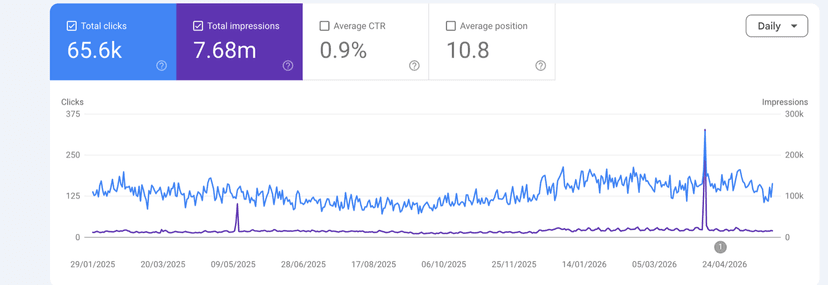
- This is the exact template behind client pages holding page one with around a million impressions, not a theory I read somewhere.
Search "service page structure SEO" and you get the same recycled checklist over and over. Hero, benefits, testimonials, FAQ, CTA. I read the top results before writing this, and they are not wrong, they are just generic. Nobody opens up their own real page, the one earning them money, and explains why each piece is there.
So that is what this post is. I am going to walk you through our own web design page from the title tag down to the footer links. It is the same template we use on client sites, including pages that have held page one of Google for months. Every section exists for two reasons at once: one for Google, one for the person about to spend money. I will give you both every time.

1. The title tag and meta description: your shop window in the results
Before anyone sees your page, they see two lines of text in Google. That is your title tag and meta description, and most businesses treat them as an afterthought.
Ours follows a simple pattern: keyword early, benefit after, brand at the end. Something like "Web Design Essex: Sites That Rank and Win You Customers | Glide Marketing". The keyword sits at the front because Google gives it more weight there and because searchers scan from the left. The benefit follows because a title tag is also an advert.
Two hard limits. Keep titles under 60 characters and descriptions under 155, or Google chops them mid sentence. The meta description is not a ranking factor, but it decides whether people click, and click through rate is the metric that turns impressions into customers.
Why it works for SEO: the keyword is unambiguous from the first word. Why it works for buyers: they know what you do and what they get before they have even clicked.
2. The hero: a benefit-led H1 and one job
Here is the bit most SEO checklists get wrong. They tell you to stuff the exact keyword into your H1. We do not.
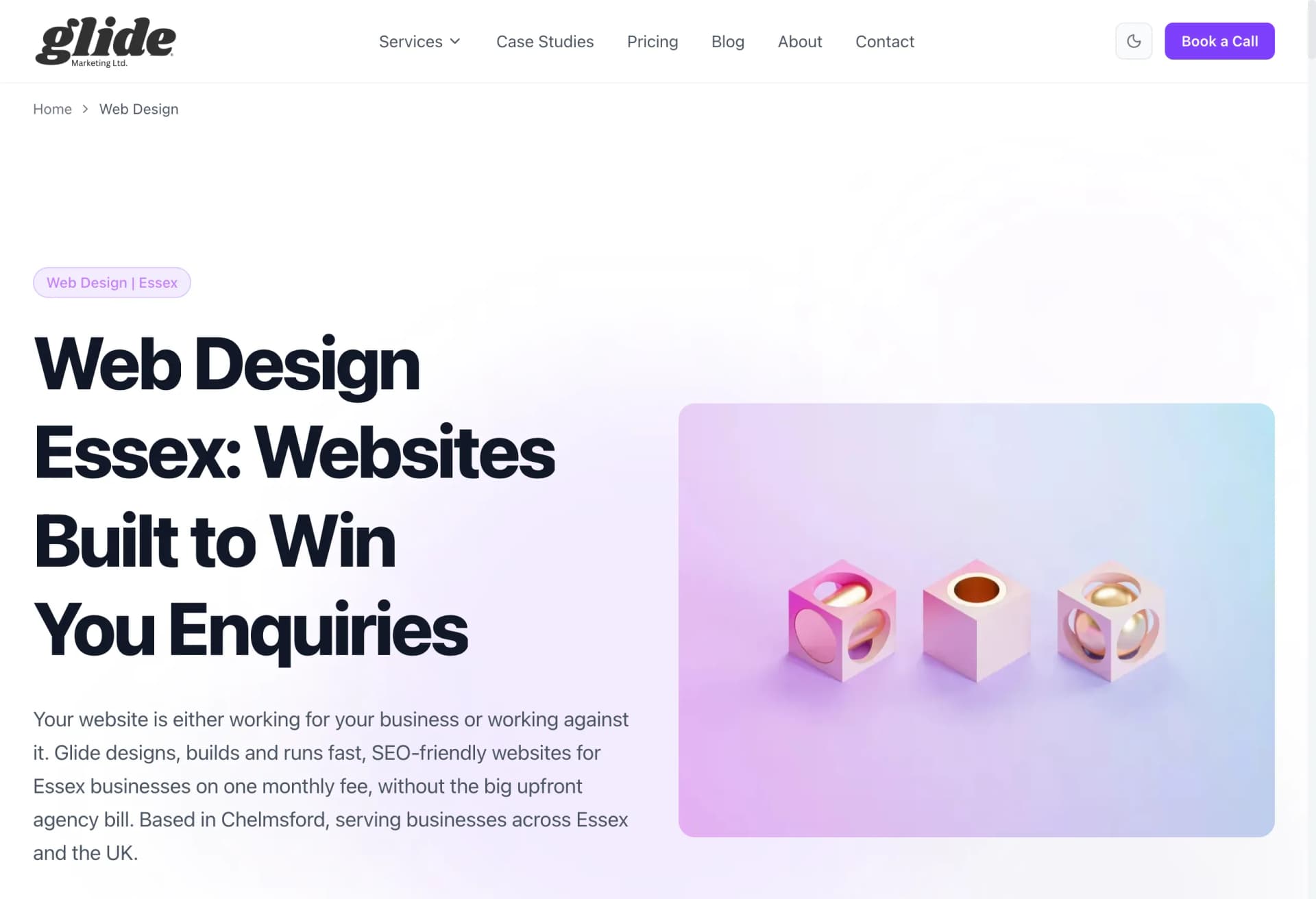
Our H1 leads with the outcome: a website that wins you customers, not just compliments. The keyword itself lives in the title tag, the subhead directly underneath, and the first paragraph. Google reads all of those together, so the topic is never in doubt. But the H1 is the first thing a human reads after clicking, and "Web Design Essex" as a headline sells nothing.
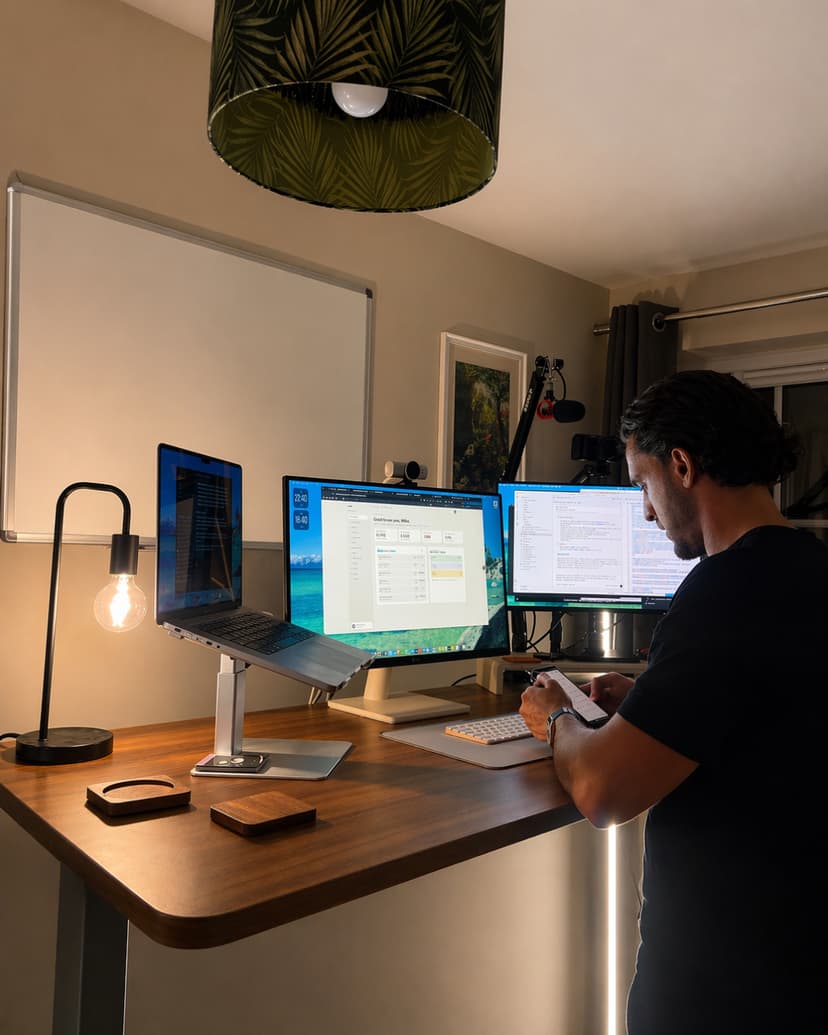
The hero has exactly one button. Not a button plus a phone number plus a newsletter box plus a chat popup. One clear next step. And the photo behind it is me, an actual person, not a stock image of three models laughing at a laptop. People buy from people, and stock photography quietly tells visitors you have something to hide.
Why it works for SEO: a clean single H1 keeps the page topic obvious, something I covered properly in my semantic HTML guide. Why it works for buyers: they land, they get it, they know what to do next. Five seconds, three answers.
3. Proof above the fold: numbers and names, not adjectives
Straight under the hero, before any feature list, we show proof. Real client names. Real Search Console screenshots. A counter showing 1,200+ Microsoft Copilot citations earned for one client. Around 7.6 million Google impressions for another.
Most agencies write "trusted experts delivering exceptional results" here. That sentence could appear on any website in any industry, which means it proves nothing. A named client with a visible number cannot be faked as easily, and visitors know it.
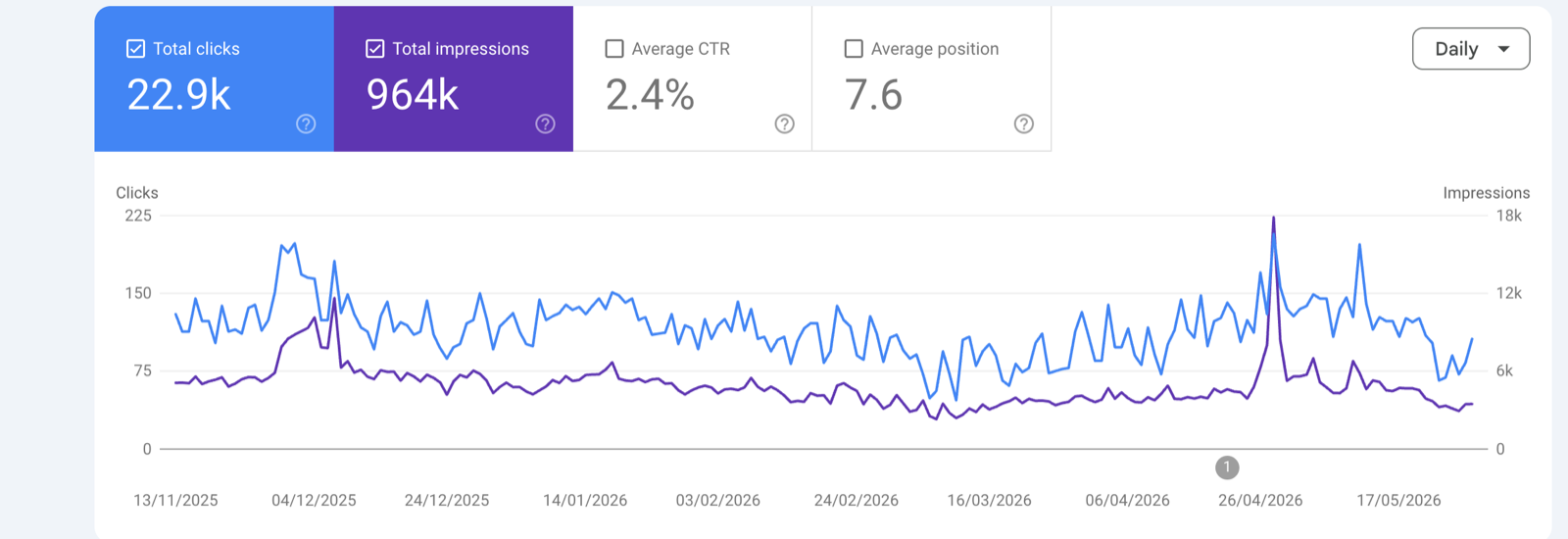
Why it works for SEO: Google's quality rater guidelines are obsessed with evidence of real experience and trust, and pages that demonstrate it tend to earn the links and engagement that follow. Why it works for buyers: the single biggest question in their head is "can these people do it?" Answer it before they have scrolled once.
4. The keyword subhead and the first 100 words
Right after the hero comes a subhead that does contain the keyword, naturally: something like "Web design in Essex that pays for itself". The first paragraph under it states, in plain English, what we do, where we do it and who it is for.
This is deliberate. The opening 100 words of a page carry real weight in how Google understands it, and they are also where a skim reader decides whether to keep going. So we spend them on clarity, not throat clearing. No "in today's fast paced digital landscape". Just: here is the service, here is the area, here is the result you can expect.
Why it works for SEO: keyword and topic confirmed early, in running text rather than a stuffed list. Why it works for buyers: nobody has to dig to find out what you sell.
5. Service detail sections: every section owns an h2
The middle of the page breaks the service into chunks: what is included, how the process works, what it costs, what happens after launch. Each chunk gets its own h2, written as something a real person might search or ask.
This is not cosmetic. Headings are the skeleton Google uses to map your page, and a logical h2 outline lets each section rank for its own long tail queries. It is the same principle that runs through our whole technical SEO playbook: structure is meaning, and machines reward pages that come pre-organised.
Why it works for SEO: one page quietly competes for dozens of related queries instead of one. Why it works for buyers: scanners can jump straight to the section they care about, usually pricing, and nobody reads a wall of text.
6. Local signals: towns, schema and a consistent NAP
We name the places we serve, in sentences a human would write. Chelmsford, Braintree, Colchester, across Essex. Not a footer stuffed with forty town names, which looks exactly as spammy to Google as it does to you.
Behind the scenes, the page carries areaServed schema markup listing those same locations, plus consistent name, address and phone details that match our Google Business Profile and every directory we appear in. That consistency, boring as it sounds, is one of the strongest local ranking signals there is. I wrote up how we handle the markup side in my schema markup guide.
Why it works for SEO: Google connects the page to local searches with confidence. Why it works for buyers: "do they cover my area?" gets answered without a phone call.
7. The FAQ section: real buyer questions, asked and answered
Near the bottom sits a block of questions we genuinely get asked on calls. How much does it cost? How long does it take? Who owns the website? What happens if I cancel?
Two rules make this section earn its place. First, the questions must be real. Made up softball questions help nobody and read as filler. Second, the section gets FAQPage schema, which makes it eligible for rich results and, increasingly, makes it the bit AI search engines quote when someone asks ChatGPT or Copilot about web design in Essex.
Why it works for SEO: the page matches long conversational queries and hands machines clean, liftable answers. Why it works for buyers: every unanswered question is a reason not to enquire. This section removes them one by one.
8. One CTA, repeated, identical every time
Down the whole page there is exactly one ask: tell us what you need. The button appears in the hero, after the proof, mid page and at the end, and it looks identical every single time. Same words, same colour, same destination.
This is CRO discipline, and it is where most service pages fall apart. They offer a call here, a quote form there, a brochure download, a newsletter, a chat widget. Six different doors, and the visitor opens none of them. Decisions are tiring. One clear, familiar door, offered at every natural pause, gets walked through.
Why it works for SEO: indirectly but measurably. Visitors who find their next step easily stick around, and engagement signals follow. Why it works for buyers: when they are ready, the button is right there, and they already trust it because they have seen it three times.
9. Internal links: up to the hub, across to the neighbours
The last structural piece is invisible to most visitors. The page links up to its parent hub and across to related services, like SEO and ongoing care plans, using descriptive anchor text rather than "click here".
These links pass authority around the site and tell Google how everything relates: this page belongs to that topic, and these services are siblings. Done across a whole site, it is one of the highest value, lowest cost SEO jobs there is. I broke the full method down in my internal linking strategy post.
Why it works for SEO: crawlers find everything, authority flows to the pages that earn money. Why it works for buyers: someone who arrived for web design discovers you also handle their SEO. That is how one enquiry becomes a bigger one.
Why the same structure wins twice
Notice the pattern in every section above. Nothing on the page exists purely for Google, and nothing exists purely for conversion. The title tag is keyword targeting and an advert. The proof is trust signals for rater guidelines and the answer to a buyer's biggest doubt. The FAQs are query matching and objection handling.
That is the real lesson, and it is the one the generic checklists miss. Google's entire business depends on sending people to pages that satisfy them. Buyers convert on clarity and proof. Build for the human and structure it for the machine, and the two goals stop competing. There is no SEO versus conversion trade-off on a well built page. There never was.
Steal this structure
Open your busiest service page next to this post and walk the list: title tag under 60 characters with the keyword early, benefit-led H1, proof above the fold, keyword in the subhead and first 100 words, an h2 per section, local signals with schema, real FAQs, one repeated CTA, internal links up and across.
Most pages I audit fail on four or more of those, and they are usually the cheapest fixes on the whole site. If you would rather we did the work, the buttons below all do the same thing: tell us about the site and you will get a straight answer and a price. Obviously.
Mike McDonnell, Founder of Glide Marketing. More about how I work.
Frequently asked questions
How long should a service page be?
Long enough to answer every question a serious buyer has, and no longer. Ours land between 900 and 1,500 words once you count the FAQs. Word count is not a ranking factor on its own, but thin pages rarely cover enough of the topic to compete, and padded pages bury the answer people came for.
Should my H1 contain the exact keyword?
Not necessarily. The exact phrase belongs in your title tag, your subhead and your first 100 words. The H1 works hardest when it sells the outcome in plain language, because the H1 is the first thing a human reads after clicking. Google reads the whole top of the page, not just one tag.
How many calls to action should a service page have?
One action, repeated. We put the same button, with the same words and the same style, in the hero, after the proof, mid page and at the end. Multiple different asks split attention and tank conversion. One ask, offered several times, respects how people scroll.
Do FAQ sections still help with SEO in 2026?
Yes, on two fronts. Google shows FAQ rich results far less than it used to, but FAQ content still matches the long conversational queries people type and speak, and AI search engines lift well structured question and answer pairs directly into their responses. Pair the on page FAQs with FAQPage schema and you cover both.
What schema markup should a service page have?
At minimum: LocalBusiness or Organization with areaServed for the towns you cover, Service for the offer itself, FAQPage for the questions section, and BreadcrumbList. None of it changes what visitors see. All of it helps machines describe you accurately.
Can I use the same structure on every service page?
Yes, and you should. The structure repeats but the content does not: each page targets its own keyword, answers its own buyer questions and shows its own proof. Google has no problem with a consistent template. It has a problem with duplicated content, which is a different thing entirely.
How do I know if my current service page structure is the problem?
Two quick checks. If the page gets impressions in Search Console but a poor click through rate, your title tag and meta description need work. If it gets clicks but no enquiries, the page itself is failing on clarity, proof or the call to action.