
Does removing hero images for category pages serve as a benefit? We find out
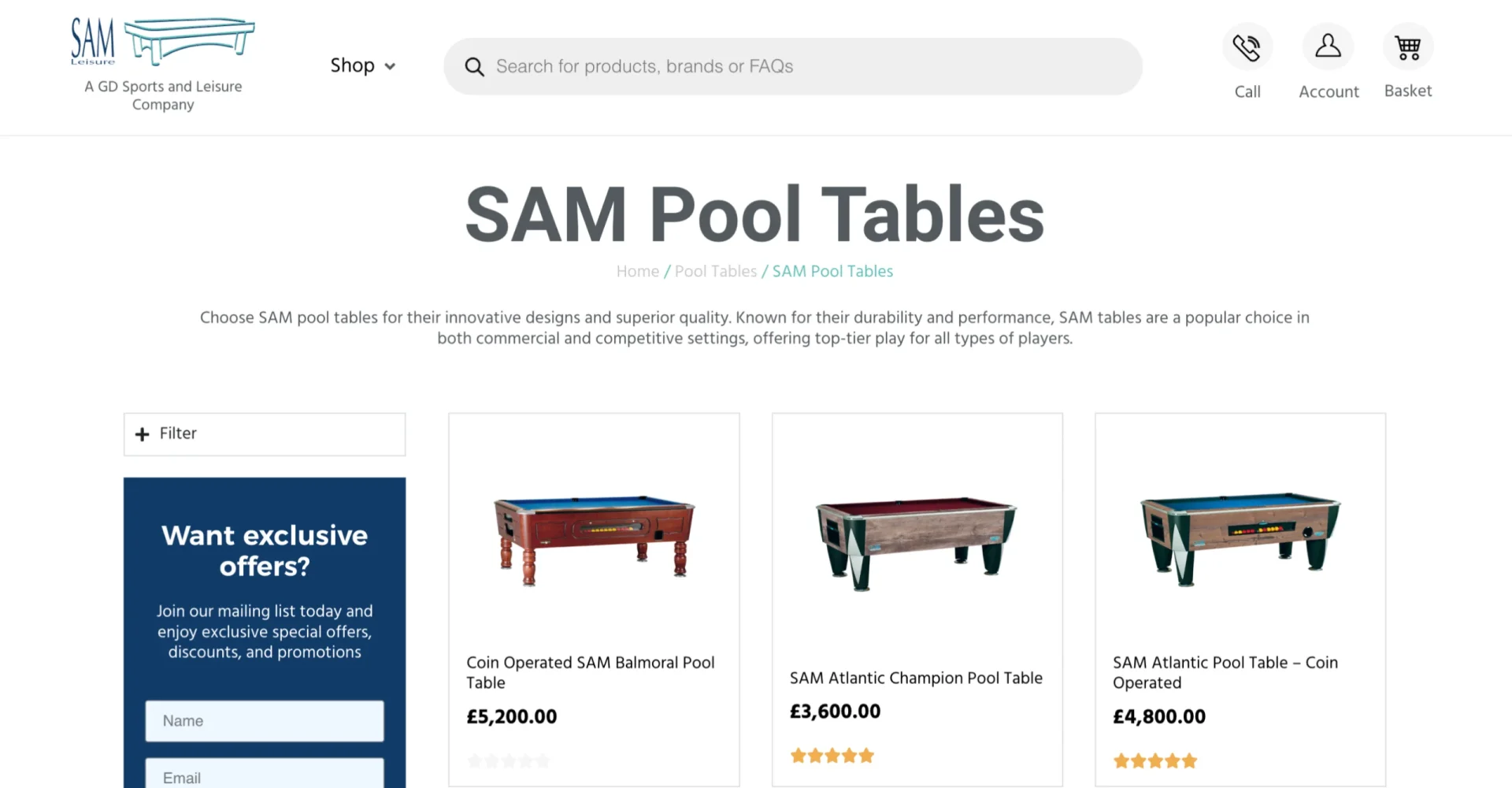
We heard from other SEOs that removing hero images on PLPs (category/collection) pages is beneficial. But, we couldn’t find evidence to support it, so we ran a real-world AB test to find out.
The CRO Trial
We heard from other SEOs that removing hero images on PLPs (category/collection) pages is beneficial as it can enhance user experience (UX) and improve SEO performance through faster page loading times. But, we couldn’t find evidence to support these claims, so we decided to run a real-world trial and share the results with you.
While visually appealing, hero images may slow page load times, especially on mobile devices, leading to higher bounce rates. It’s a personal preference, but I prefer no hero image from a user standpoint; I like opening a category page from Google and immediately seeing product options without the need to scroll down the page.
Supporting Evidence
A study by Matthew Gove highlights that hero images can sometimes fail to convey the intended message, potentially confusing visitors and detracting from the user experience. (Source: Matthew Gove’s Blog)
Additionally, Neil Patel emphasises the importance of optimising category pages for SEO, suggesting that unnecessary elements, such as large hero images, can hinder performance. (Source: Neil Patel)
By removing or optimising hero images, websites can achieve faster load times, better user engagement, and improved search engine rankings.
Special Thanks
This trial was conducted on samleisure.co.uk. Thanks to Matthew Drage, Managing Director, for allowing us to share these study results with you publicly.
Connect with Matt Drage on LinkedIn
Trial Overview
Matt and I discussed implementing this for the SAM Leisure site. Whilst Matt likes the hero images on category pages, I prefer just the title.
But, Matt was willing to budge if it meant an improved user experience and increased revenue.
However, as no published results were available online, we decided to proceed with our own A/B Test before implementing this change, and we thought we’d share these results with you!
For context, SAM Leisure is an e-commerce client of ours that sells indoor gaming and sports equipment like pool tables, cues, air hockey tables, table football, and more.
Fun Fact: Mick Hill, the six-time World 8-Ball Pool Champion, owns and plays on the SAM Atlantic table!

Before
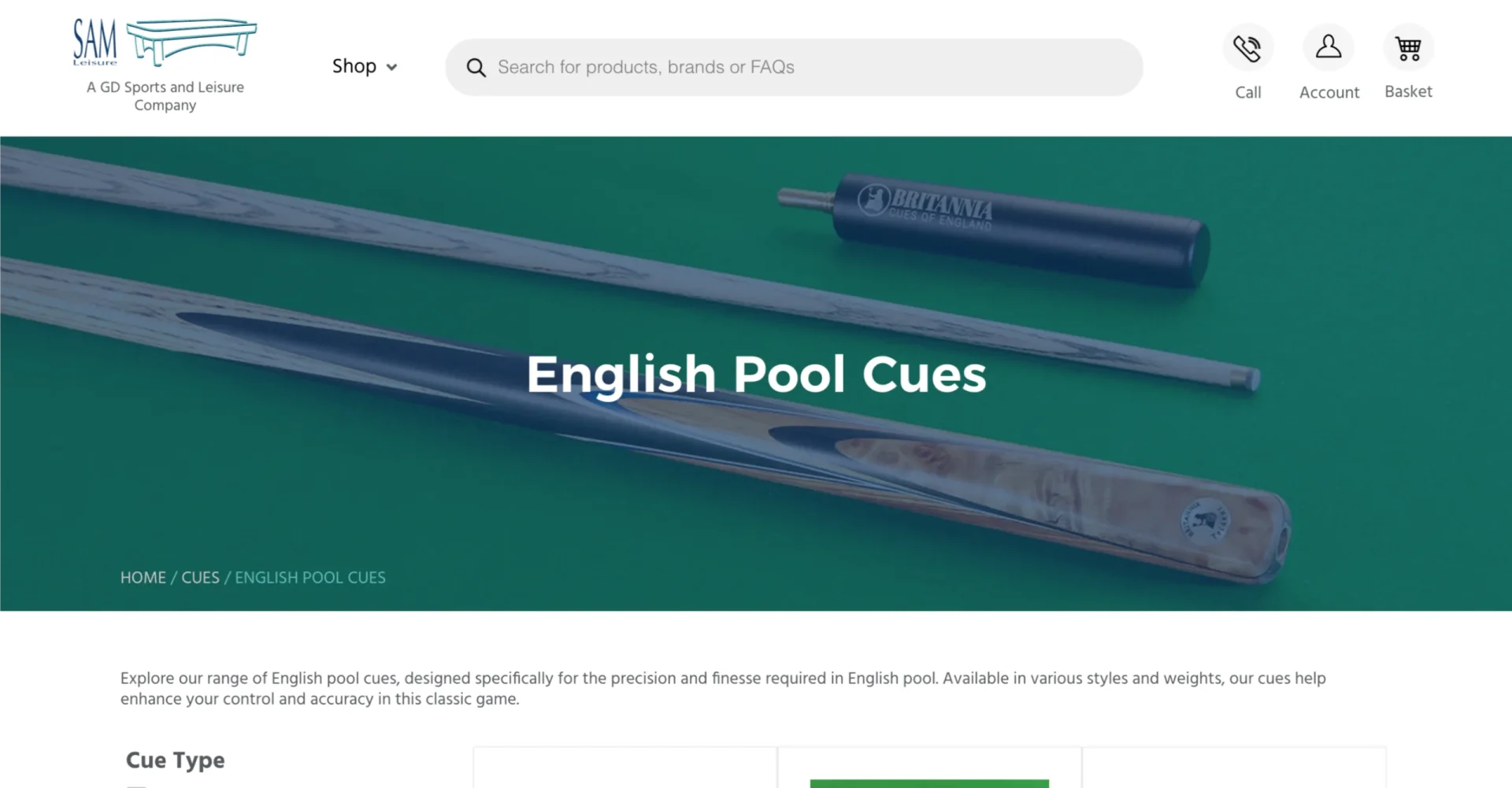
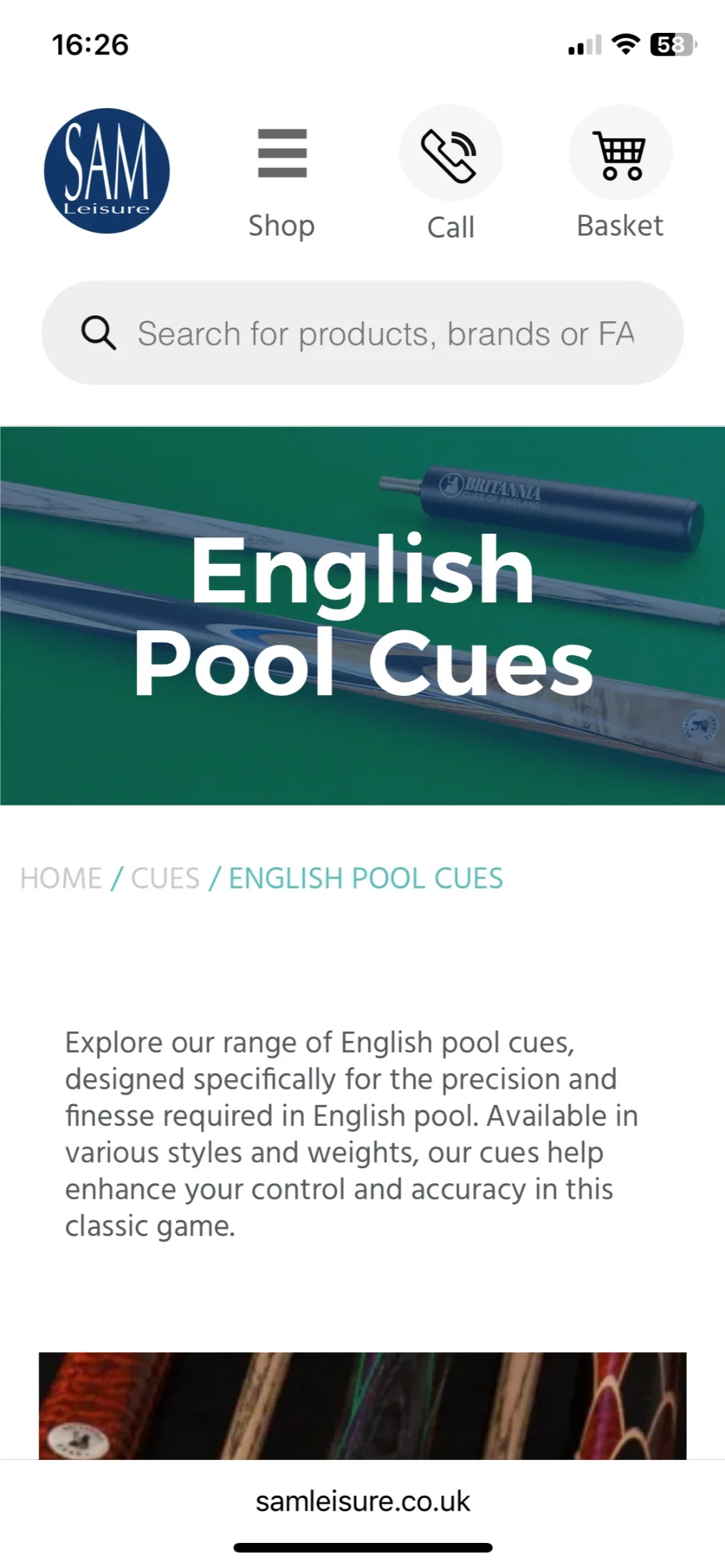
Here is what the category pages on the website looked like in the A-Test – with the hero images:
Desktop –
Mobile –
After
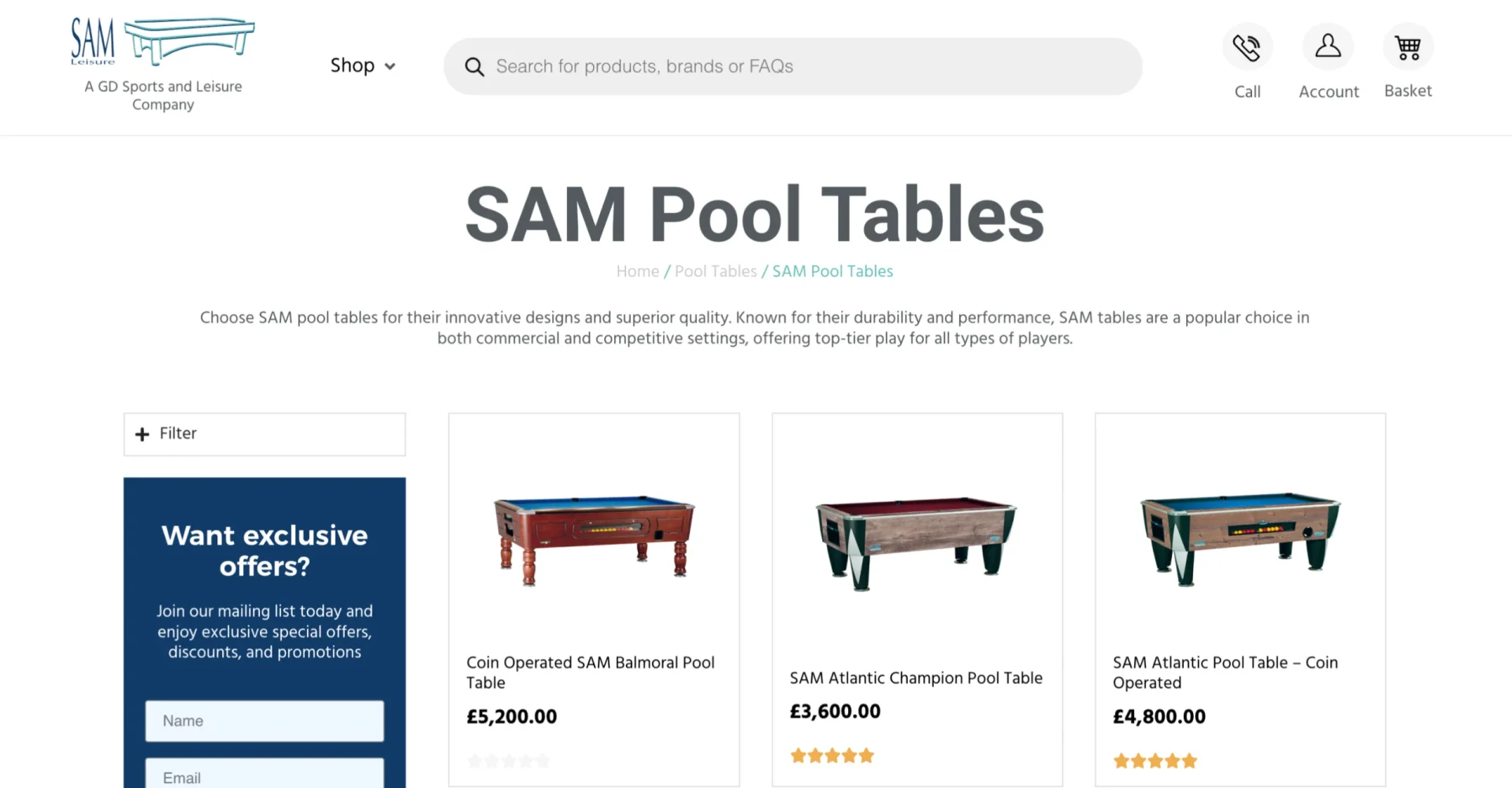
And here is what the category pages on the website looked like in the B-Test – without the hero images:
Desktop –
Mobile –
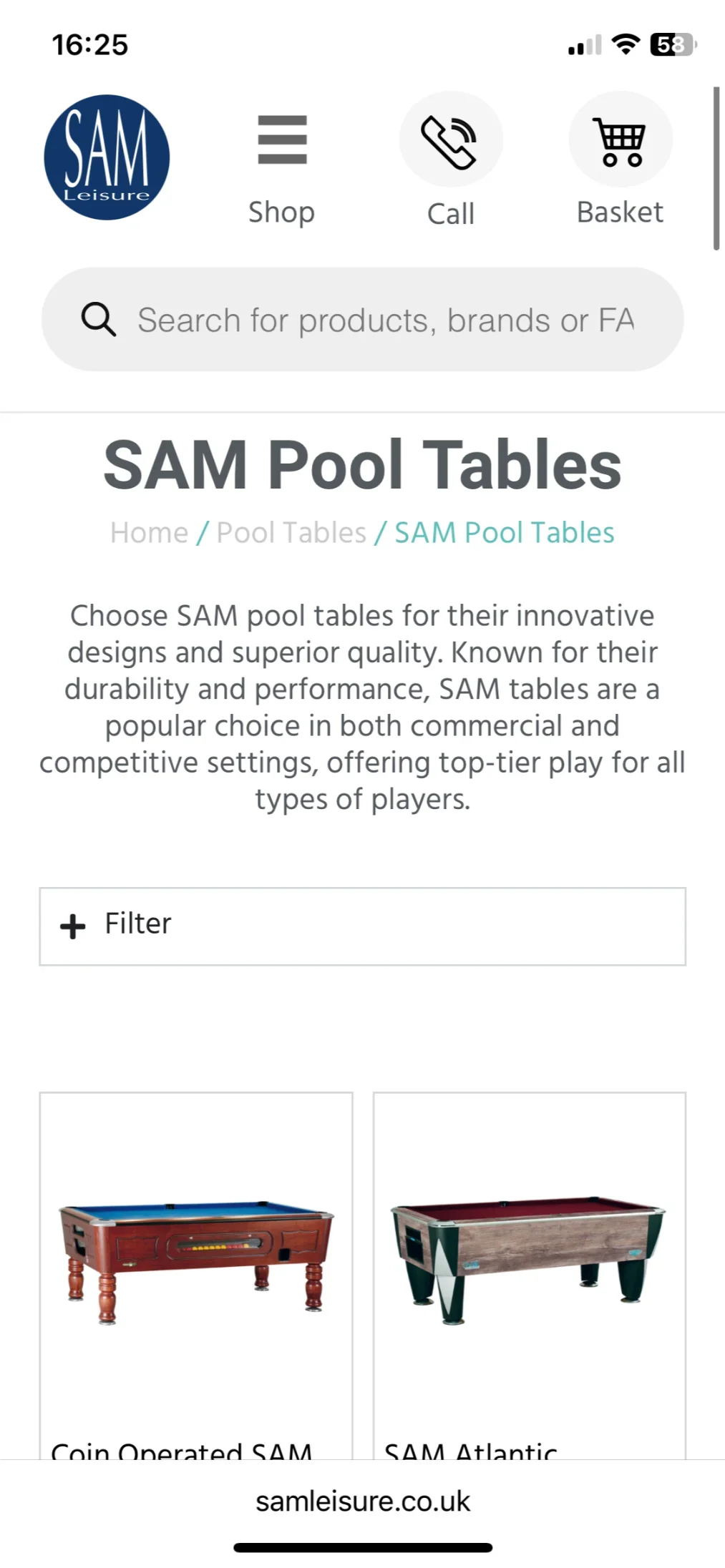
Which do you prefer visually?
Trial Duration
A Test (Original with Hero Image): 4th September to 3rd October 2024
B Test (Without Hero Image): 4th October to 3rd November 2024
The Results:
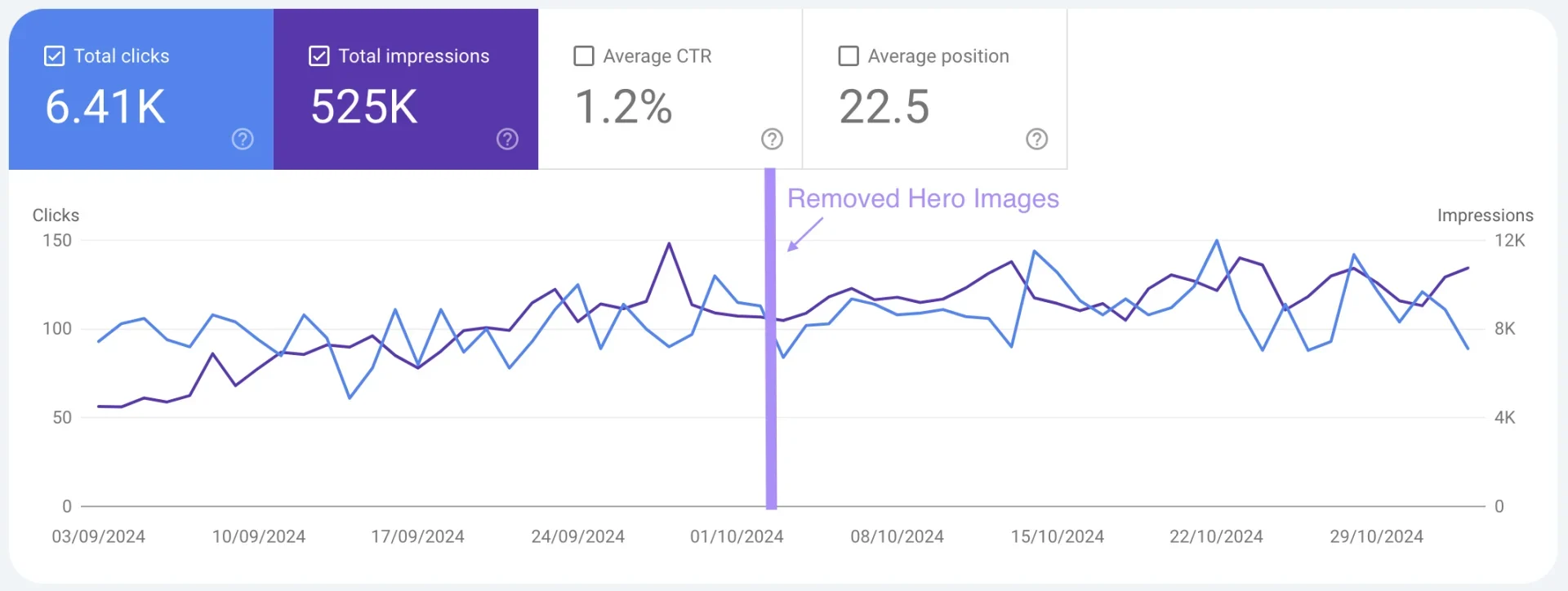
Search Console Organic Traffic
Clicks
A Test: 2.95k
B Test: 3.36k
Increase: +410 visitors (13.9%)
Impressions
A Test: 227k
B Test: 293k
Increase: +66,000 impressions (29.07%)
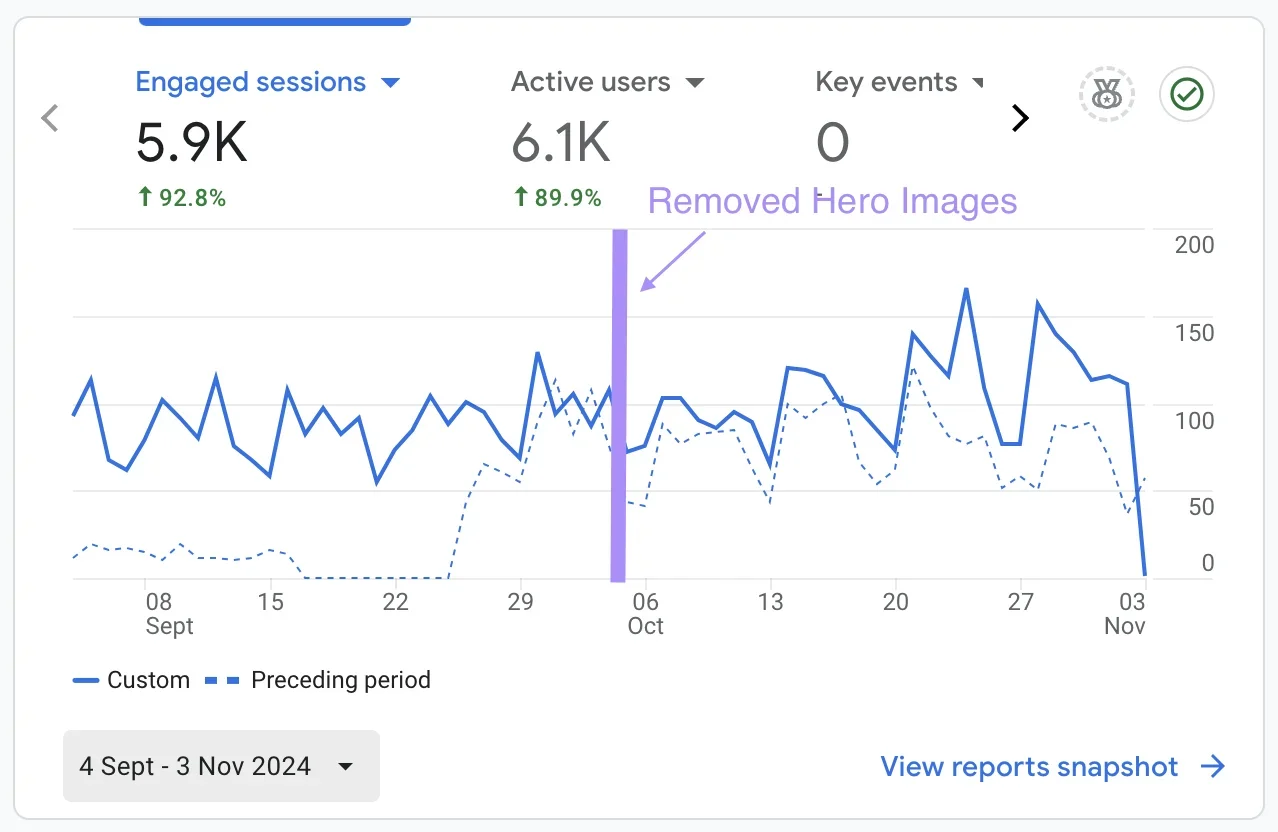
Google Analytics
Active Users (Product Category Pages Only)
A Test: 1,227
B Test: 1,617
Increase: +390 users (31.78%)
Clicks (Product Category Pages Only)
A Test: 51
B Test: 109
Increase: +58 clicks (113.73%)
Average Engagement Time Per User
A Test: 1 min 5 sec
B Test: 1 min 11 sec
Increase: +6 sec (9.23%)
Sales Data
Order Quantity
A Test: 42
B Test: 59
Increase: +17 orders (40.48%)
Sales Value
A Test: (Confidential)
B Test: (Confidential)
Percentage Increase: 132.80%
Conversion Rate Optimisation (CRO)
Conversion Rate
A Test: 3.42%
B Test: 3.65%
Percentage Increase: +0.23%
Additional Considerations
Understandably, seasonal factors play a role in e-commerce. Sales often rise in October as consumers start holiday shopping. According to Digital Commerce 360, nonstore sales increased by 10.4% year over year in October 2023. Additionally, the Office for National Statistics reported a 0.3% rise in sales volumes during September 2024, following a 1.0% increase in August.
Despite these variables, the data suggests that removing a hero image positively impacts SEO and conversions.